
JEE Main and Advanced
Shorts, with free notes
Each Short shows one idea in under a minute and ends on a quiz. The notes explain the idea, give a solved example and a practice set, and work out the quiz. Free to read and download, with no sign up.
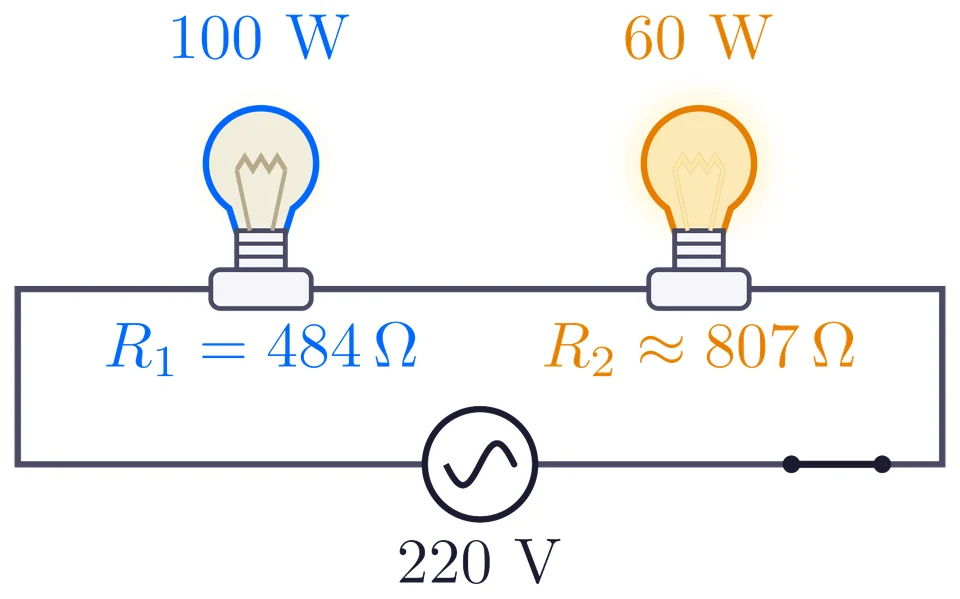
Which Bulb Glows Brighter in Series?
Two bulbs rated for the same voltage, joined in series: the lower wattage bulb glows brighter. The notes go from the rating to the resistance to the power.
Coming on Sunday, 1 November at 7 PM IST
The Short and its free notes come out together.
Which Bulb Glows Brighter in Series?
Two bulbs rated for the same voltage, joined in series: the lower wattage bulb glows brighter. The notes go from the rating to the resistance to the power.
Free PDF, 4 pages: the idea, a solved example, practice questions, and the worked answer to the Short's quiz.
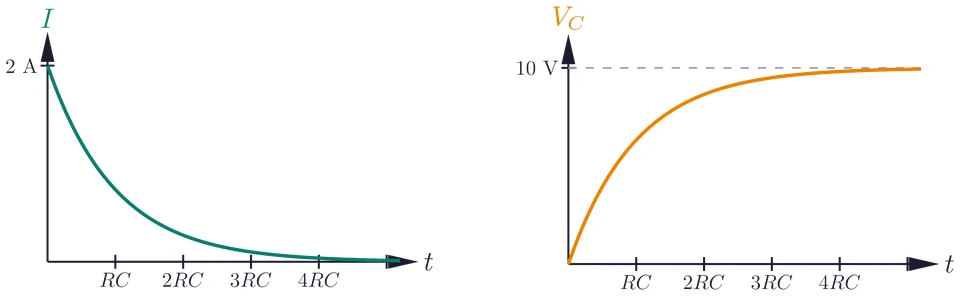
A Capacitor at Switch-On
Just after switch-on, an uncharged capacitor acts like a plain wire; after a long time, like an open circuit. The notes show why, with the charging curves.
Coming on Monday, 2 November at 7 PM IST
The Short and its free notes come out together.
A Capacitor at Switch-On
Just after switch-on, an uncharged capacitor acts like a plain wire; after a long time, like an open circuit. The notes show why, with the charging curves.
Free PDF, 4 pages: the idea, a solved example, practice questions, and the worked answer to the Short's quiz.
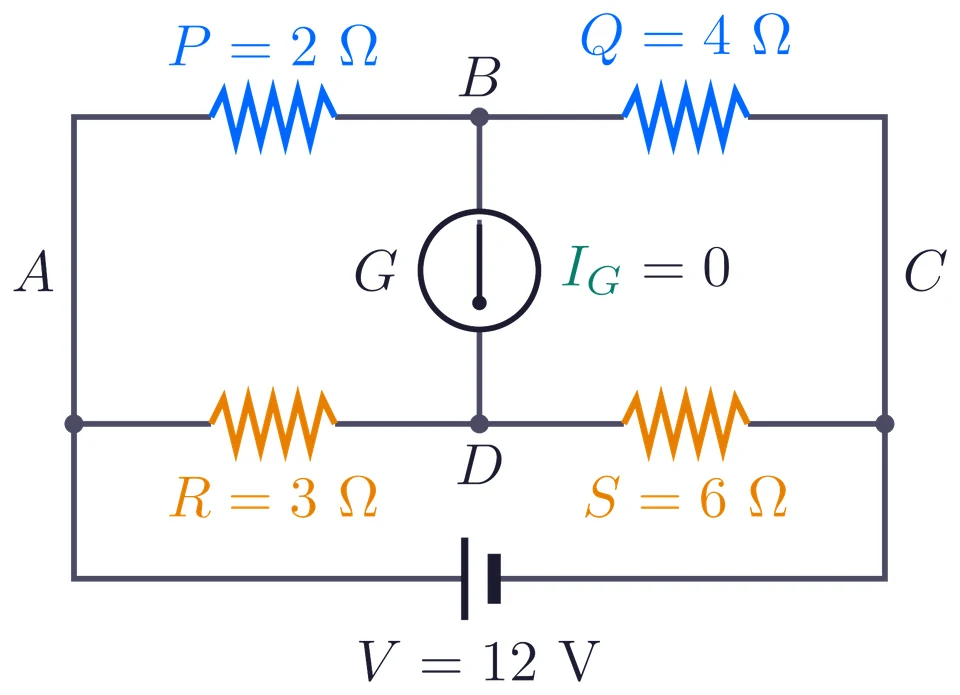
Balanced Wheatstone Bridge
In a Wheatstone bridge the galvanometer reads zero when P/Q = R/S: the bridge is balanced. The notes show why, and how the middle resistor then drops out.
Coming on Tuesday, 3 November at 7 PM IST
The Short and its free notes come out together.
Balanced Wheatstone Bridge
In a Wheatstone bridge the galvanometer reads zero when P/Q = R/S: the bridge is balanced. The notes show why, and how the middle resistor then drops out.
Free PDF, 4 pages: the idea, a solved example, practice questions, and the worked answer to the Short's quiz.
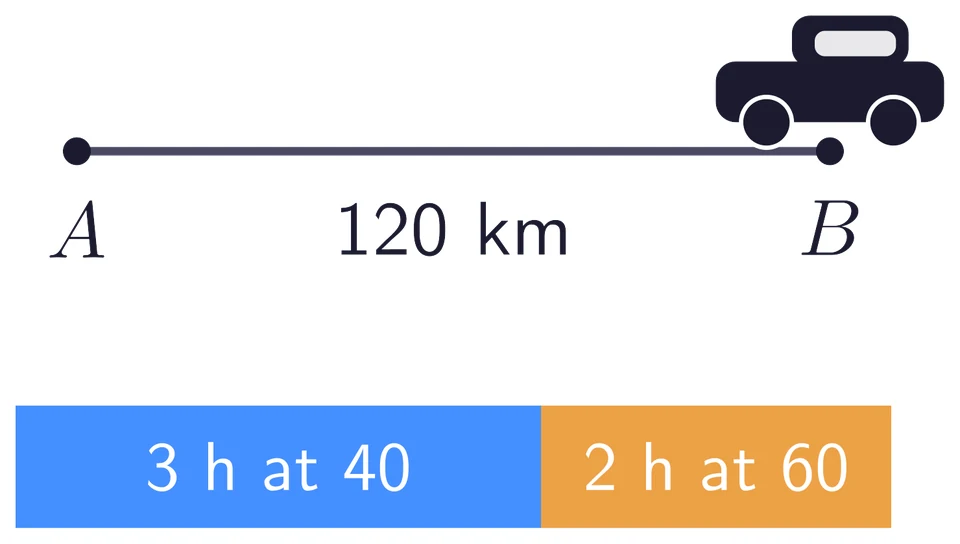
Average Speed
40 km/h there and 60 km/h back is not 50 on average: average speed is the total distance over the total time, and the speed held for longer counts for more.
Coming on Wednesday, 4 November at 7 PM IST
The Short and its free notes come out together.
Average Speed
40 km/h there and 60 km/h back is not 50 on average: average speed is the total distance over the total time, and the speed held for longer counts for more.
Free PDF, 4 pages: the idea, a solved example, practice questions, and the worked answer to the Short's quiz.
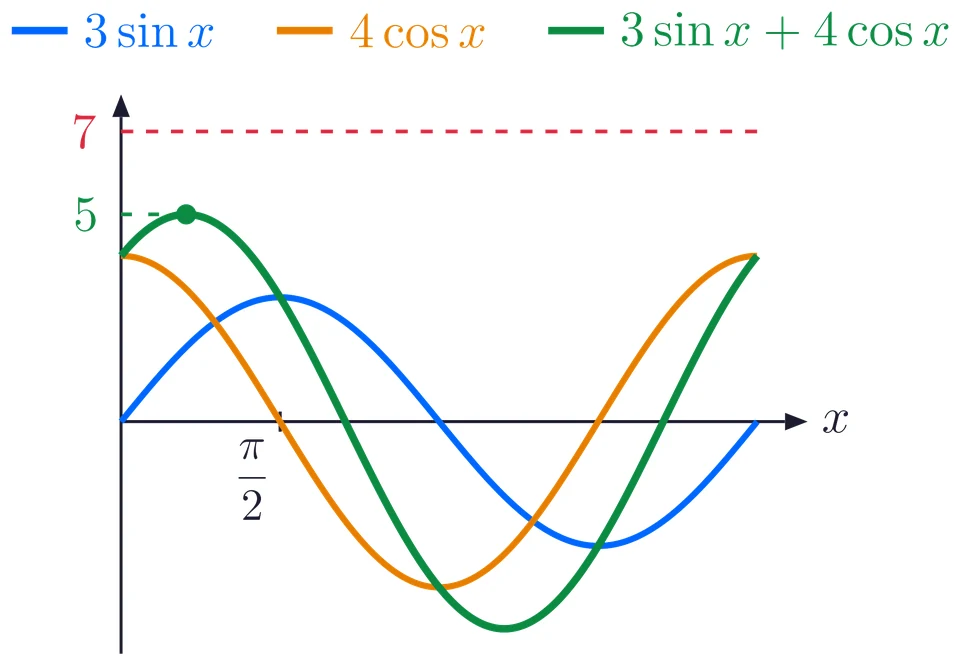
Maximum of a sin x + b cos x
The maximum of 3 sin x + 4 cos x is 5, not 7: the two terms never peak at the same x. In general a sin x + b cos x runs from -√(a² + b²) to √(a² + b²); the notes show why.
Coming on Thursday, 5 November at 7 PM IST
The Short and its free notes come out together.
Maximum of a sin x + b cos x
The maximum of 3 sin x + 4 cos x is 5, not 7: the two terms never peak at the same x. In general a sin x + b cos x runs from -√(a² + b²) to √(a² + b²); the notes show why.
Free PDF, 4 pages: the idea, a solved example, practice questions, and the worked answer to the Short's quiz.
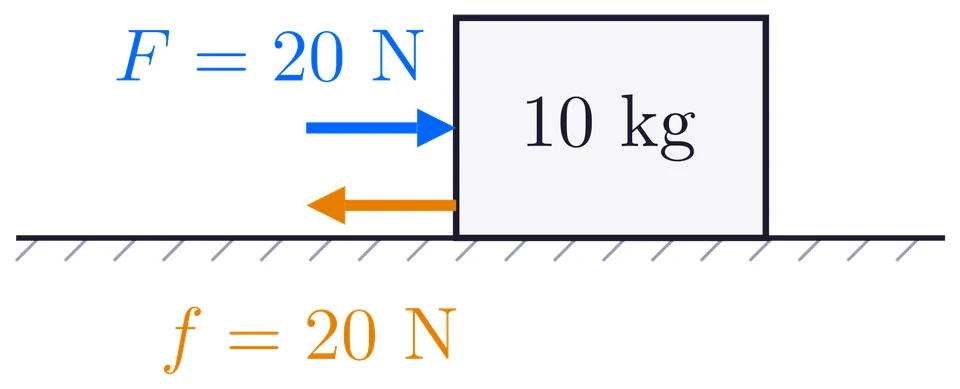
Static Friction
A 20 N push on a block whose friction limit is 50 N: the friction is 20 N. Static friction matches the push, up to its limit; the notes add sliding, slopes and walls.
Coming on Friday, 6 November at 7 PM IST
The Short and its free notes come out together.
Static Friction
A 20 N push on a block whose friction limit is 50 N: the friction is 20 N. Static friction matches the push, up to its limit; the notes add sliding, slopes and walls.
Free PDF, 4 pages: the idea, a solved example, practice questions, and the worked answer to the Short's quiz.
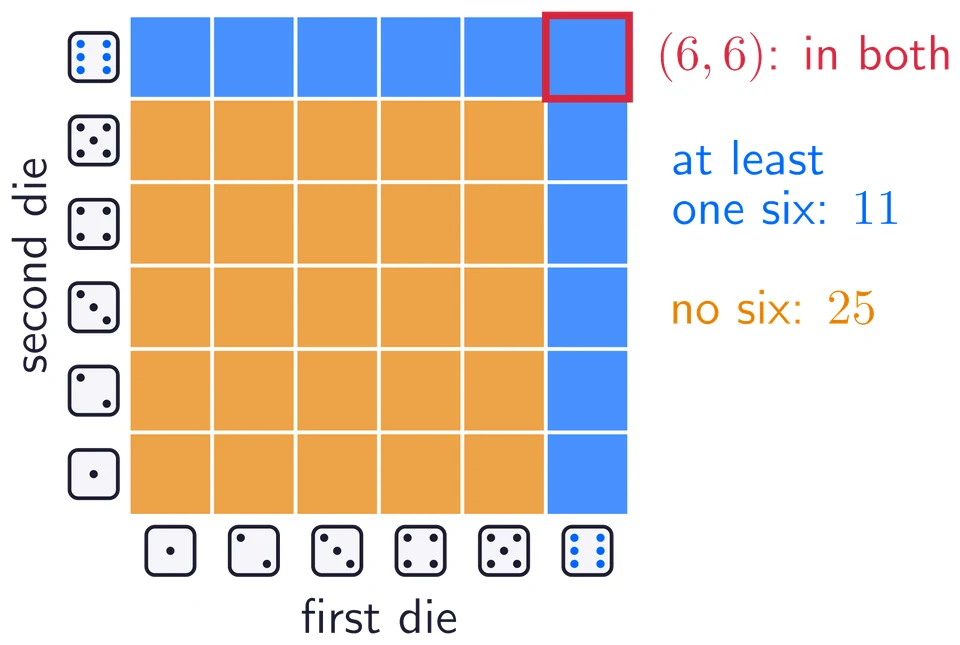
At Least One Six
Two dice: the probability of at least one six is 11/36, not 1/6 + 1/6, because adding counts (6, 6) twice. Count the opposite: P(at least one six) = 1 - P(no six); the notes show it on the 6 x 6 grid and the 6 x 6 x 6 cube.
Coming on Saturday, 7 November at 7 PM IST
The Short and its free notes come out together.
At Least One Six
Two dice: the probability of at least one six is 11/36, not 1/6 + 1/6, because adding counts (6, 6) twice. Count the opposite: P(at least one six) = 1 - P(no six); the notes show it on the 6 x 6 grid and the 6 x 6 x 6 cube.
Free PDF, 4 pages: the idea, a solved example, practice questions, and the worked answer to the Short's quiz.
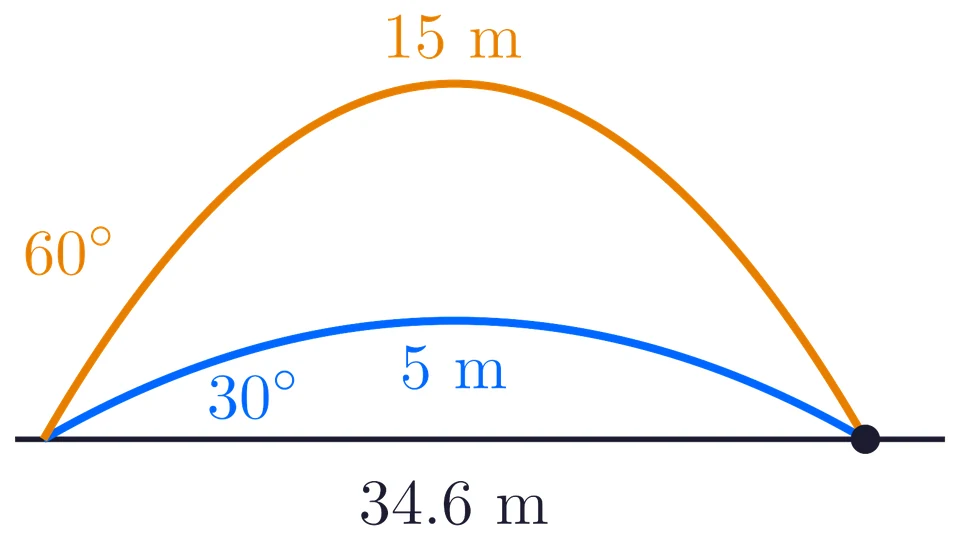
Range of a Projectile
Thrown at the same speed from level ground with no air, 30° and 60° land at the same distance: the range depends on sin 2θ, and the angles θ and 90° - θ give the same value. The largest range is at 45°.
Coming on Sunday, 8 November at 7 PM IST
The Short and its free notes come out together.
Range of a Projectile
Thrown at the same speed from level ground with no air, 30° and 60° land at the same distance: the range depends on sin 2θ, and the angles θ and 90° - θ give the same value. The largest range is at 45°.
Free PDF, 4 pages: the idea, a solved example, practice questions, and the worked answer to the Short's quiz.
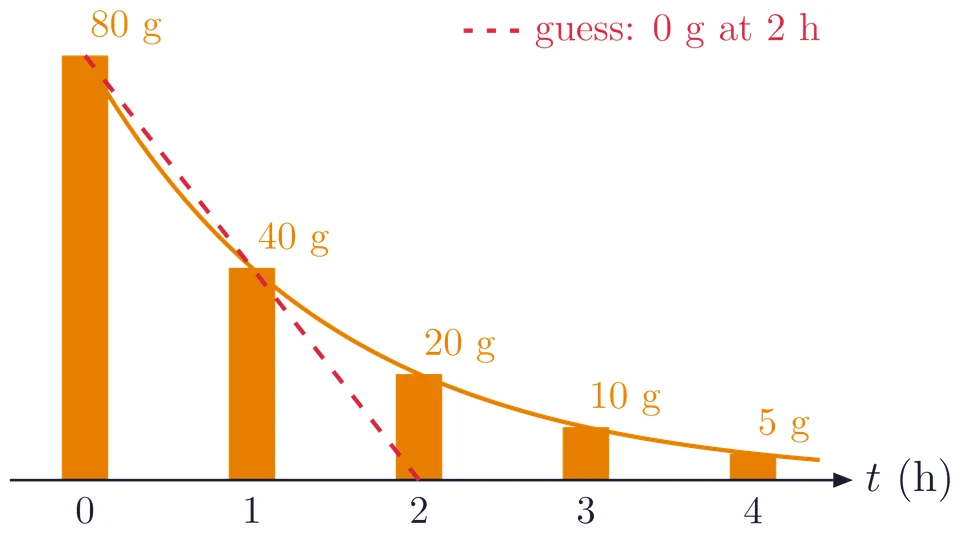
Half-Life
Half of a radioactive substance decays in 1 hour, but it is not all gone in 2 hours: each half-life halves what is left, so a quarter remains after 2 hours and an eighth after 3. The same law runs a first-order reaction.
Coming on Monday, 9 November at 7 PM IST
The Short and its free notes come out together.
Half-Life
Half of a radioactive substance decays in 1 hour, but it is not all gone in 2 hours: each half-life halves what is left, so a quarter remains after 2 hours and an eighth after 3. The same law runs a first-order reaction.
Free PDF, 4 pages: the idea, a solved example, practice questions, and the worked answer to the Short's quiz.
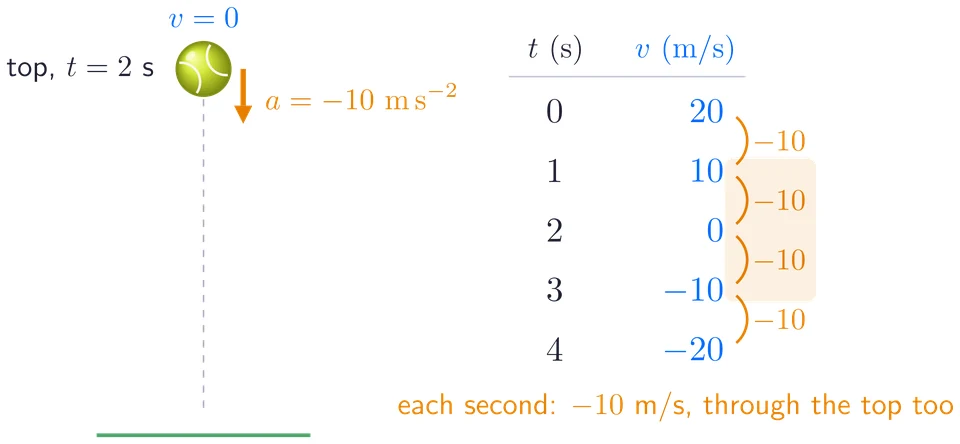
Velocity Zero, Acceleration Not
At the top of a vertical throw the ball stops for an instant, so v = 0. Its acceleration is still g, downward: the velocity keeps changing by 10 m/s every second, through the top too.
Coming on Tuesday, 10 November at 7 PM IST
The Short and its free notes come out together.
Velocity Zero, Acceleration Not
At the top of a vertical throw the ball stops for an instant, so v = 0. Its acceleration is still g, downward: the velocity keeps changing by 10 m/s every second, through the top too.
Free PDF, 4 pages: the idea, a solved example, practice questions, and the worked answer to the Short's quiz.
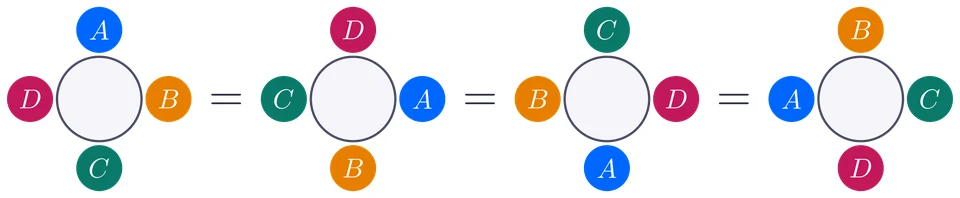
Seating Round a Table
4 people can sit in a row in 4! = 24 ways, but round a table in only 6: moving everyone one seat round keeps every neighbour, so it is the same seating. n people round a table sit in (n - 1)! ways.
Coming on Wednesday, 11 November at 7 PM IST
The Short and its free notes come out together.
Seating Round a Table
4 people can sit in a row in 4! = 24 ways, but round a table in only 6: moving everyone one seat round keeps every neighbour, so it is the same seating. n people round a table sit in (n - 1)! ways.
Free PDF, 4 pages: the idea, a solved example, practice questions, and the worked answer to the Short's quiz.
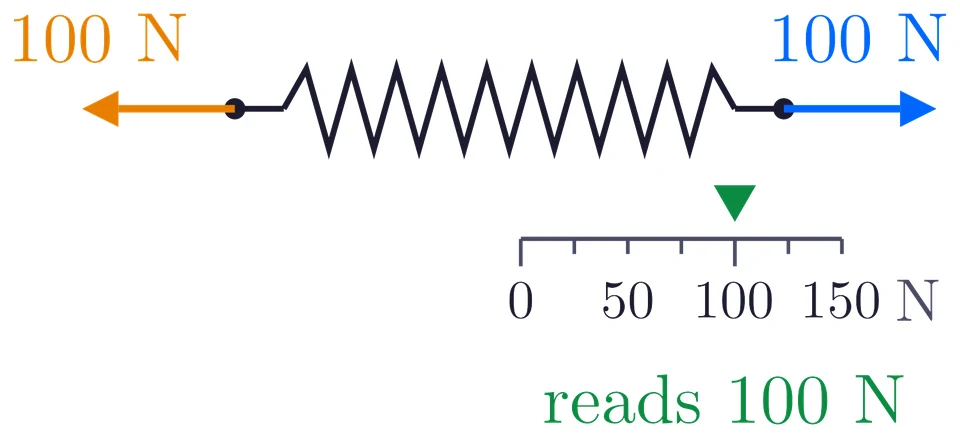
What a Spring Balance Reads
A spring balance pulled with 100 N at each end reads 100 N, not 200 N. At rest, it reads the tension in its spring: the pull at one end, exactly as when one end is tied to a wall.
Coming on Thursday, 12 November at 7 PM IST
The Short and its free notes come out together.
What a Spring Balance Reads
A spring balance pulled with 100 N at each end reads 100 N, not 200 N. At rest, it reads the tension in its spring: the pull at one end, exactly as when one end is tied to a wall.
Free PDF, 4 pages: the idea, a solved example, practice questions, and the worked answer to the Short's quiz.
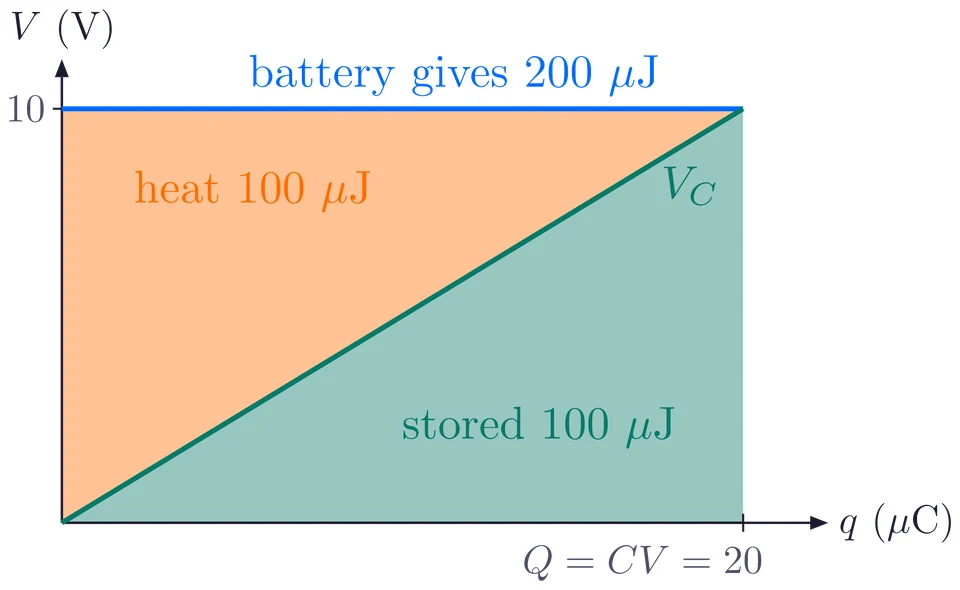
Charging a Capacitor: Where Half the Energy Goes
A battery that fully charges a capacitor does work CV², but the capacitor keeps only ½CV². The other half becomes heat in the resistance, whatever that resistance is.
Coming on Monday, 16 November at 7 PM IST
The Short and its free notes come out together.
Charging a Capacitor: Where Half the Energy Goes
A battery that fully charges a capacitor does work CV², but the capacitor keeps only ½CV². The other half becomes heat in the resistance, whatever that resistance is.
Free PDF, 4 pages: the idea, a solved example, practice questions, and the worked answer to the Short's quiz.
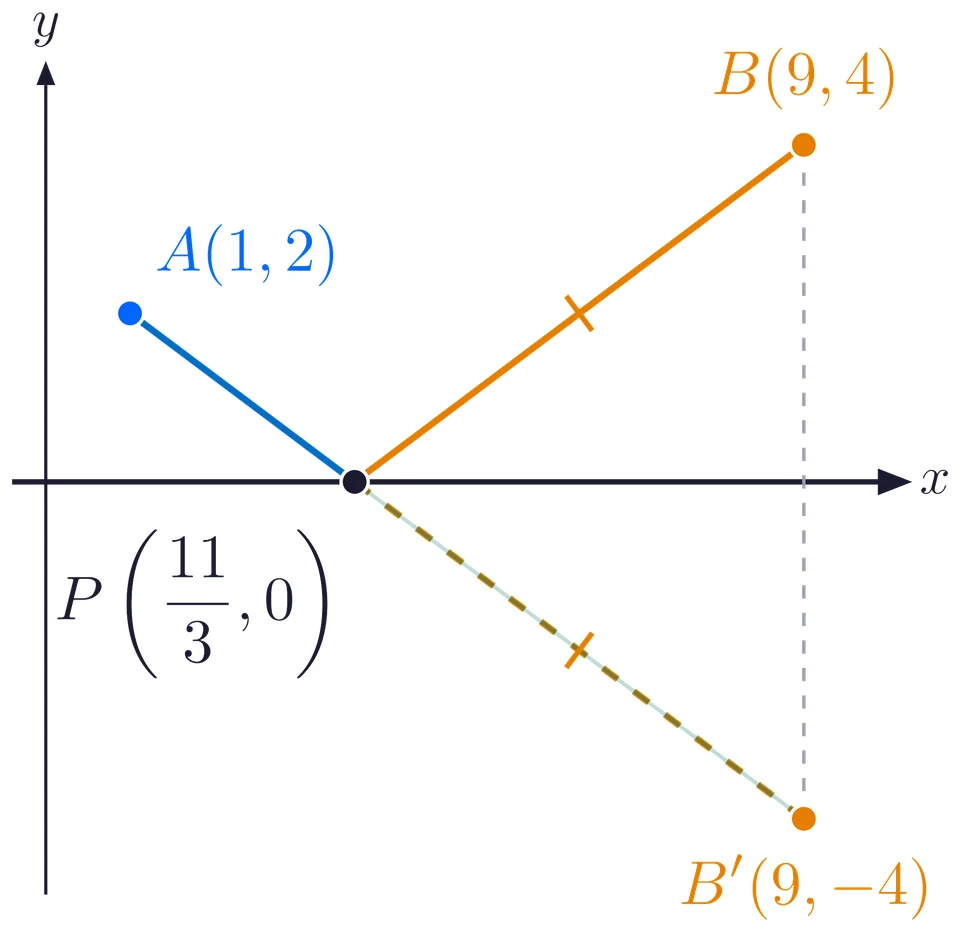
Least PA + PB: Mirror One Point
A and B are on the same side of a line and P moves on the line. Mirror B in the line to get B'. The least value of PA + PB is AB', where AB' meets the line.
Coming on Tuesday, 17 November at 7 PM IST
The Short and its free notes come out together.
Least PA + PB: Mirror One Point
A and B are on the same side of a line and P moves on the line. Mirror B in the line to get B'. The least value of PA + PB is AB', where AB' meets the line.
Free PDF, 4 pages: the idea, a solved example, practice questions, and the worked answer to the Short's quiz.
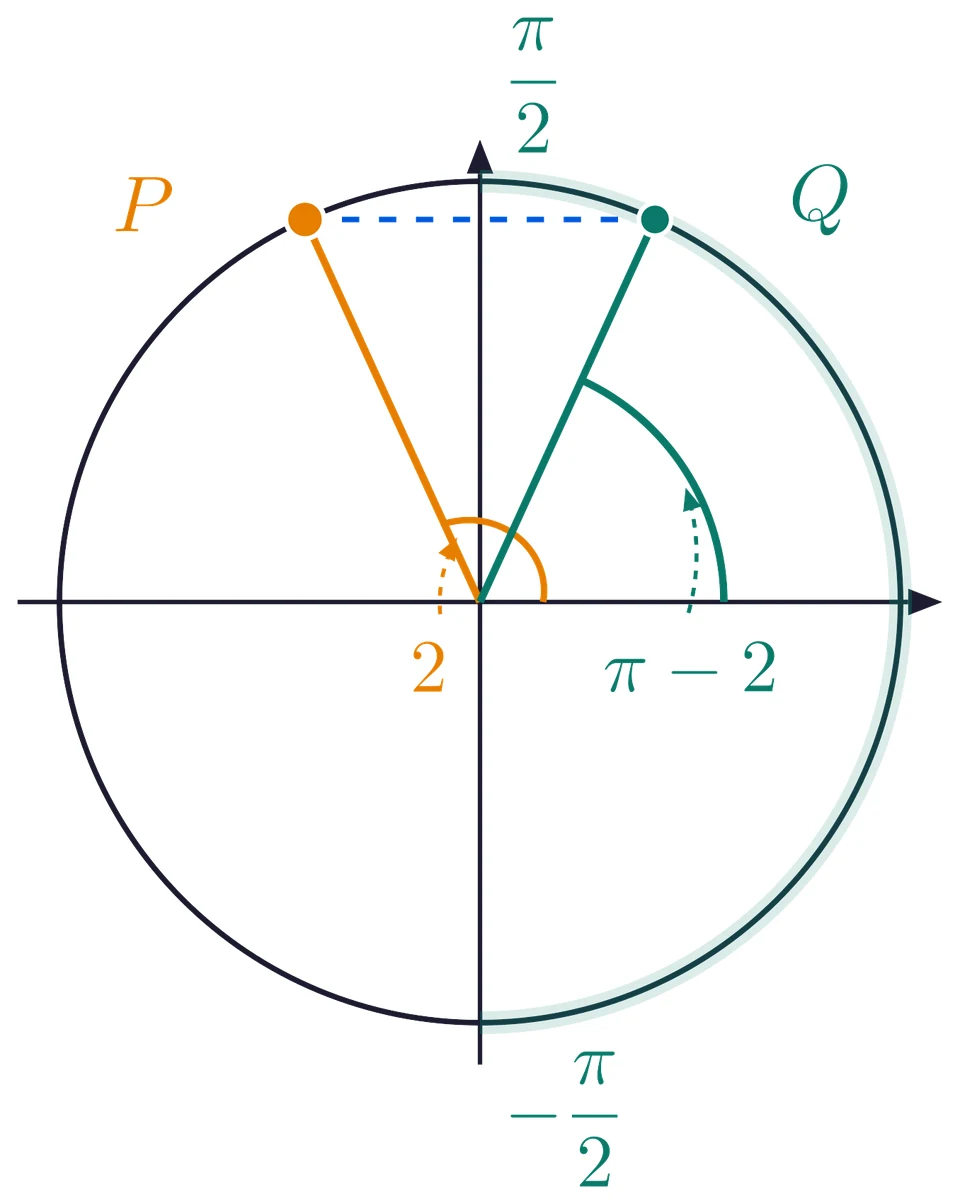
Why sin⁻¹(sin 2) Is Not 2
sin⁻¹ always gives an angle from -π/2 to π/2. So sin⁻¹(sin x) = x only when x is in that range; for x = 2 the answer is π - 2, about 1.14.
Coming on Wednesday, 18 November at 7 PM IST
The Short and its free notes come out together.
Why sin⁻¹(sin 2) Is Not 2
sin⁻¹ always gives an angle from -π/2 to π/2. So sin⁻¹(sin x) = x only when x is in that range; for x = 2 the answer is π - 2, about 1.14.
Free PDF, 4 pages: the idea, a solved example, practice questions, and the worked answer to the Short's quiz.
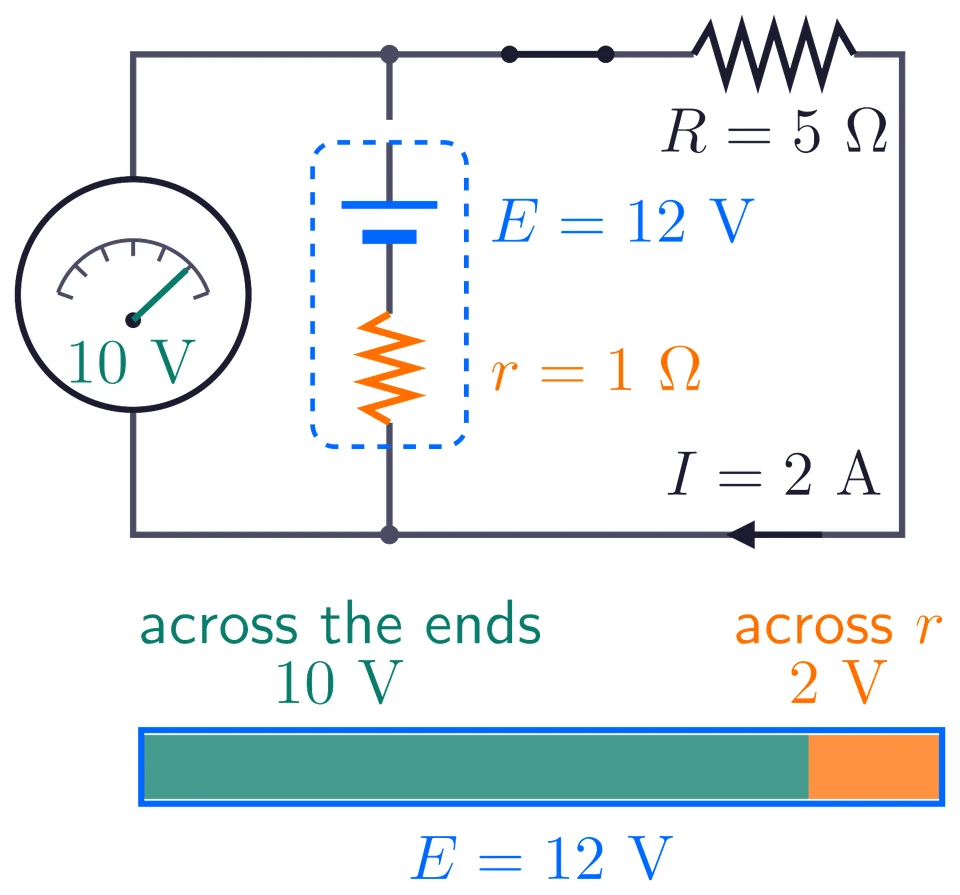
Why a 12 V Battery Gives Only 10 V
Every battery has a small resistance r inside it. While it drives a current I, a voltage Ir is used up across r, so the voltage across its ends is V = E - Ir, less than its emf E.
Coming on Thursday, 19 November at 7 PM IST
The Short and its free notes come out together.
Why a 12 V Battery Gives Only 10 V
Every battery has a small resistance r inside it. While it drives a current I, a voltage Ir is used up across r, so the voltage across its ends is V = E - Ir, less than its emf E.
Free PDF, 4 pages: the idea, a solved example, practice questions, and the worked answer to the Short's quiz.
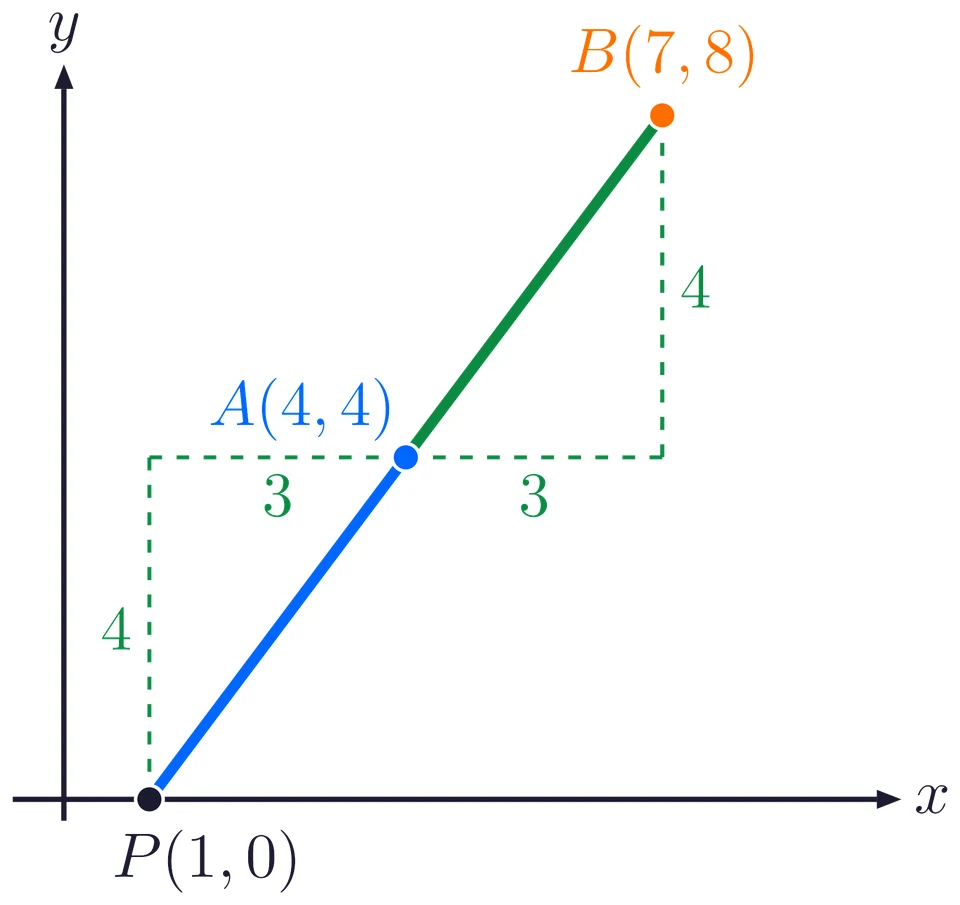
Greatest |PA - PB| for P on a Line
A and B are on the same side of a line and P moves on the line. |PA - PB| is never more than AB, and it equals AB where the line AB meets the line P moves on.
Coming on Friday, 20 November at 7 PM IST
The Short and its free notes come out together.
Greatest |PA - PB| for P on a Line
A and B are on the same side of a line and P moves on the line. |PA - PB| is never more than AB, and it equals AB where the line AB meets the line P moves on.
Free PDF, 4 pages: the idea, a solved example, practice questions, and the worked answer to the Short's quiz.
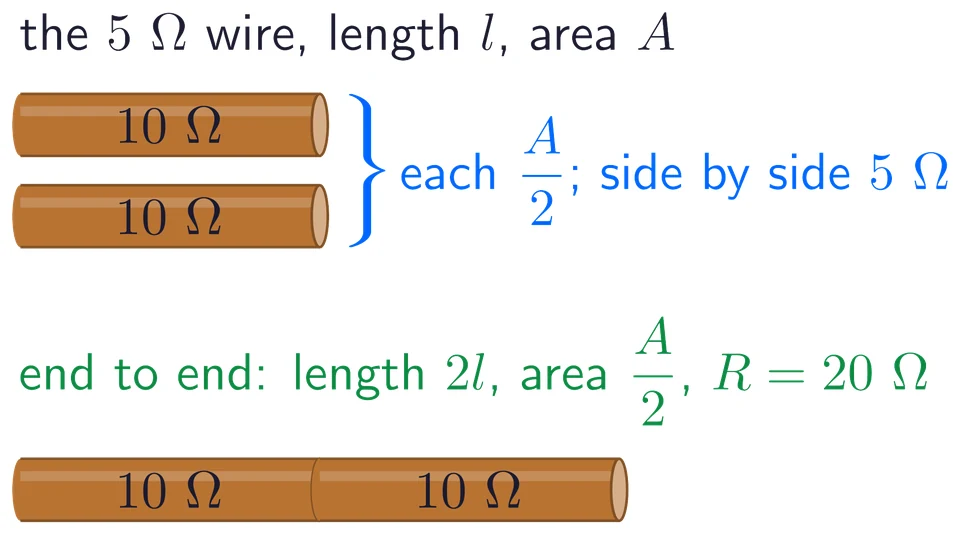
Stretch a Wire to Twice Its Length
A stretched wire keeps its volume, so when the length becomes n times, the area becomes n times smaller and the resistance becomes n² times. Twice the length gives four times the resistance, not twice.
Coming on Saturday, 21 November at 7 PM IST
The Short and its free notes come out together.
Stretch a Wire to Twice Its Length
A stretched wire keeps its volume, so when the length becomes n times, the area becomes n times smaller and the resistance becomes n² times. Twice the length gives four times the resistance, not twice.
Free PDF, 4 pages: the idea, a solved example, practice questions, and the worked answer to the Short's quiz.
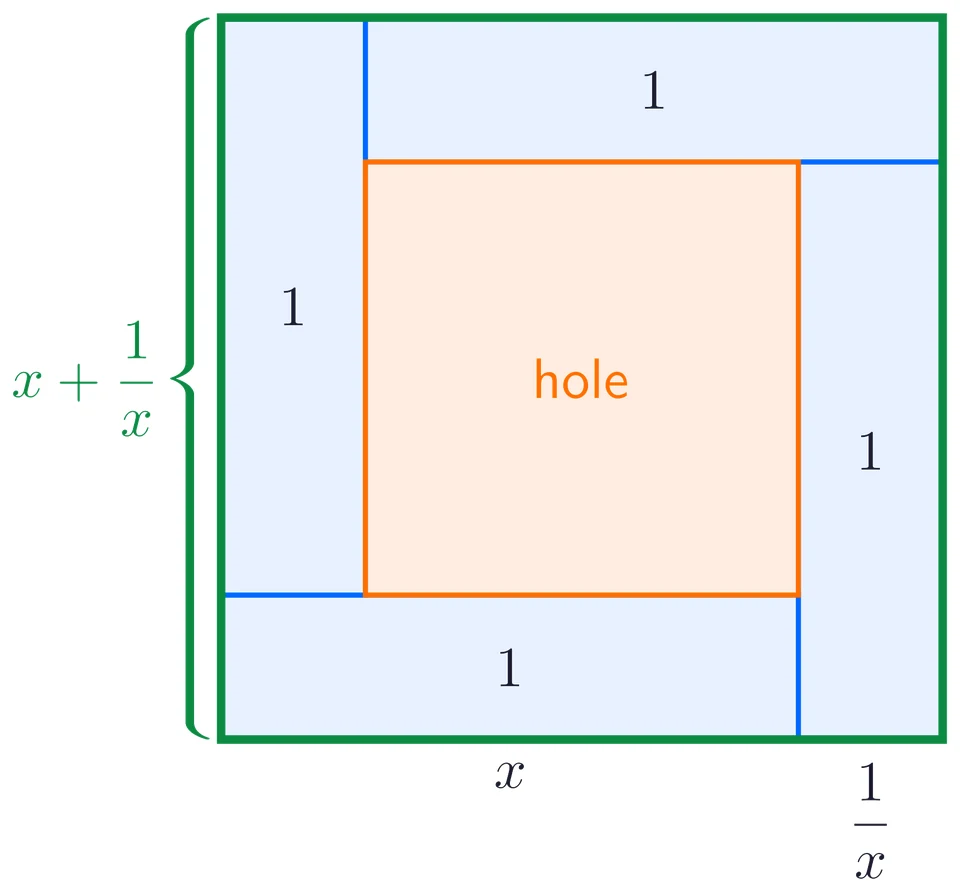
Why Is x + 1/x at Least 2?
For every positive x, x + 1/x is at least 2, and equal to 2 only at x = 1. Four rectangles of area 1 round a square of side x + 1/x leave a hole, so the square's area is at least 4.
Coming on Sunday, 22 November at 7 PM IST
The Short and its free notes come out together.
Why Is x + 1/x at Least 2?
For every positive x, x + 1/x is at least 2, and equal to 2 only at x = 1. Four rectangles of area 1 round a square of side x + 1/x leave a hole, so the square's area is at least 4.
Free PDF, 4 pages: the idea, a solved example, practice questions, and the worked answer to the Short's quiz.
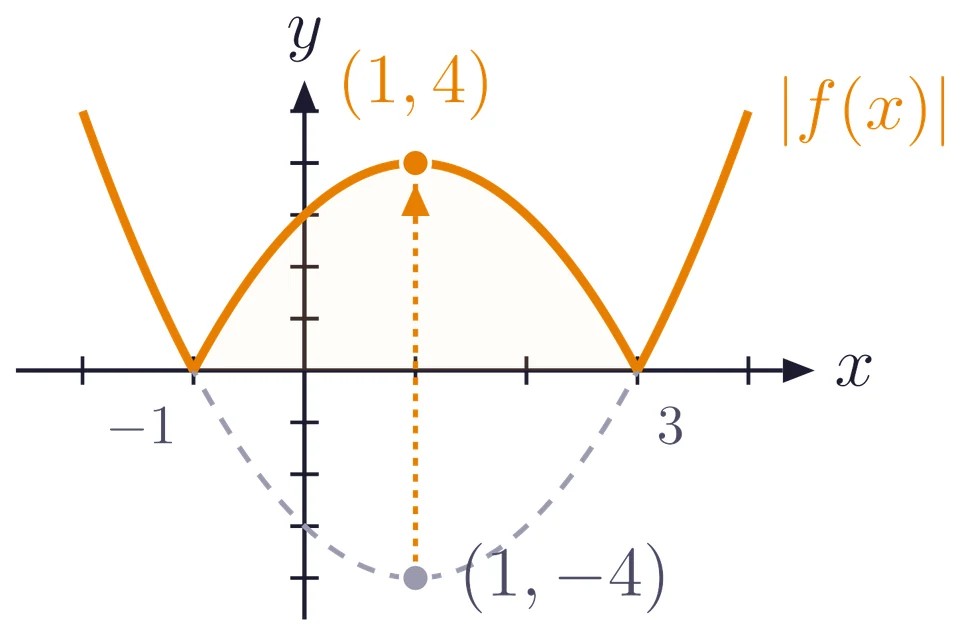
|f(x)| and f(|x|) Are Not the Same Graph
The modulus outside acts on the output: the part of the graph below the x-axis turns up. The modulus inside acts on the input: the right part is kept and copied over the y-axis.
Coming on Monday, 23 November at 7 PM IST
The Short and its free notes come out together.
|f(x)| and f(|x|) Are Not the Same Graph
The modulus outside acts on the output: the part of the graph below the x-axis turns up. The modulus inside acts on the input: the right part is kept and copied over the y-axis.
Free PDF, 4 pages: the idea, a solved example, practice questions, and the worked answer to the Short's quiz.
Never miss a Short
Subscribe on YouTube and tap the bell to get each one first.