
Mathematics for JEE Main and Advanced
Complex Numbers
Complex numbers drawn on the Argand plane: modulus, argument, rotation and locus, one idea per lesson.
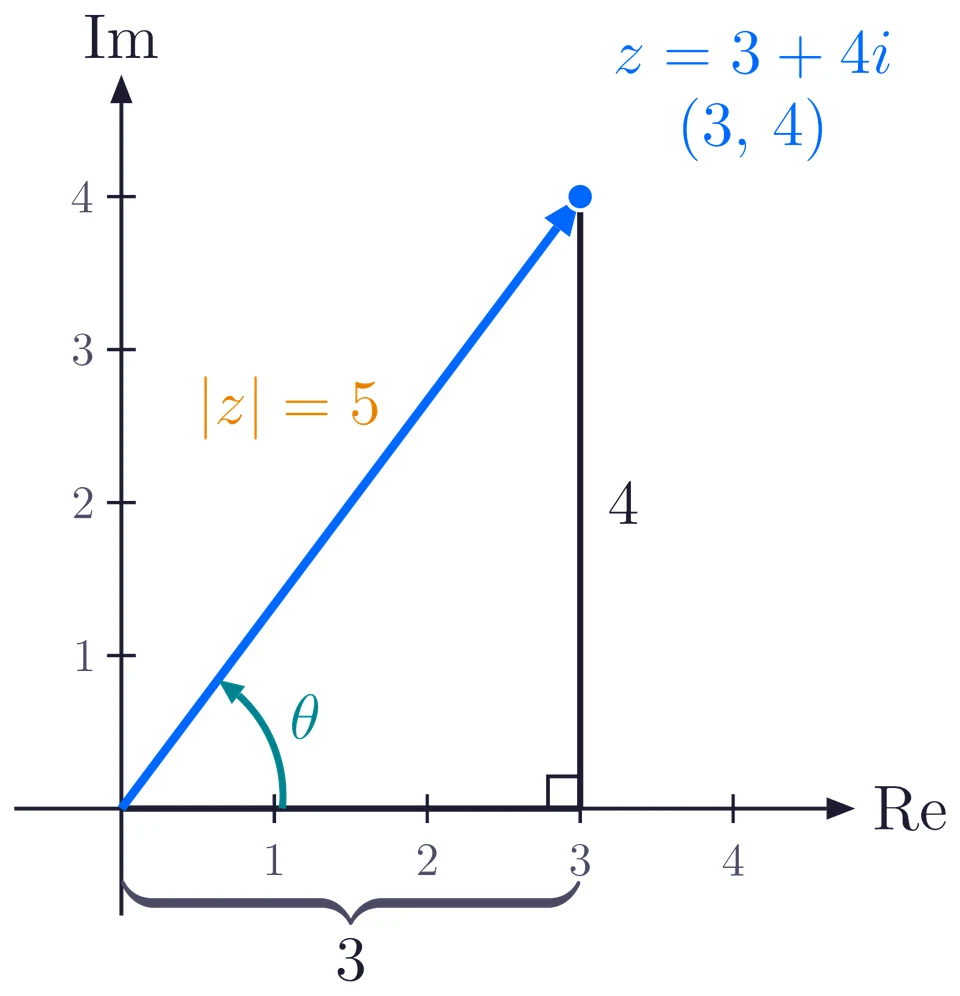
Modulus and Argument of a Complex Number
A complex number is a point, and also an arrow from the origin. Its modulus is how long the arrow is. Its argument is which way the arrow points.
Free PDF, 5 pages: the idea, a solved example, practice questions with answers.
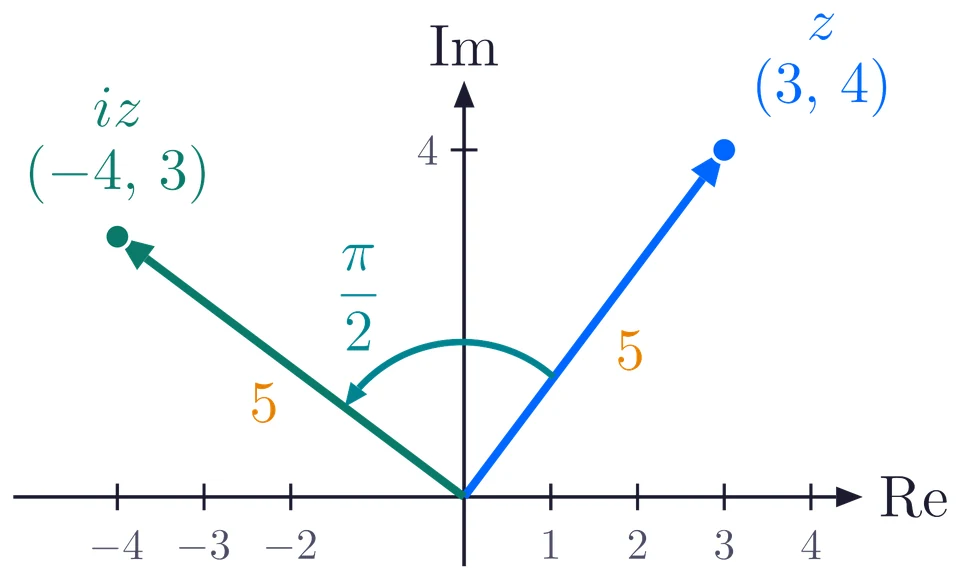
Multiplication of Complex Numbers as Rotation
Multiplying by a complex number w turns the arrow by arg w and scales its length by |w|. The lengths multiply and the angles add, so one multiplication can rotate any point about the origin.
Free PDF, 6 pages: the idea, a solved example, practice questions with answers.
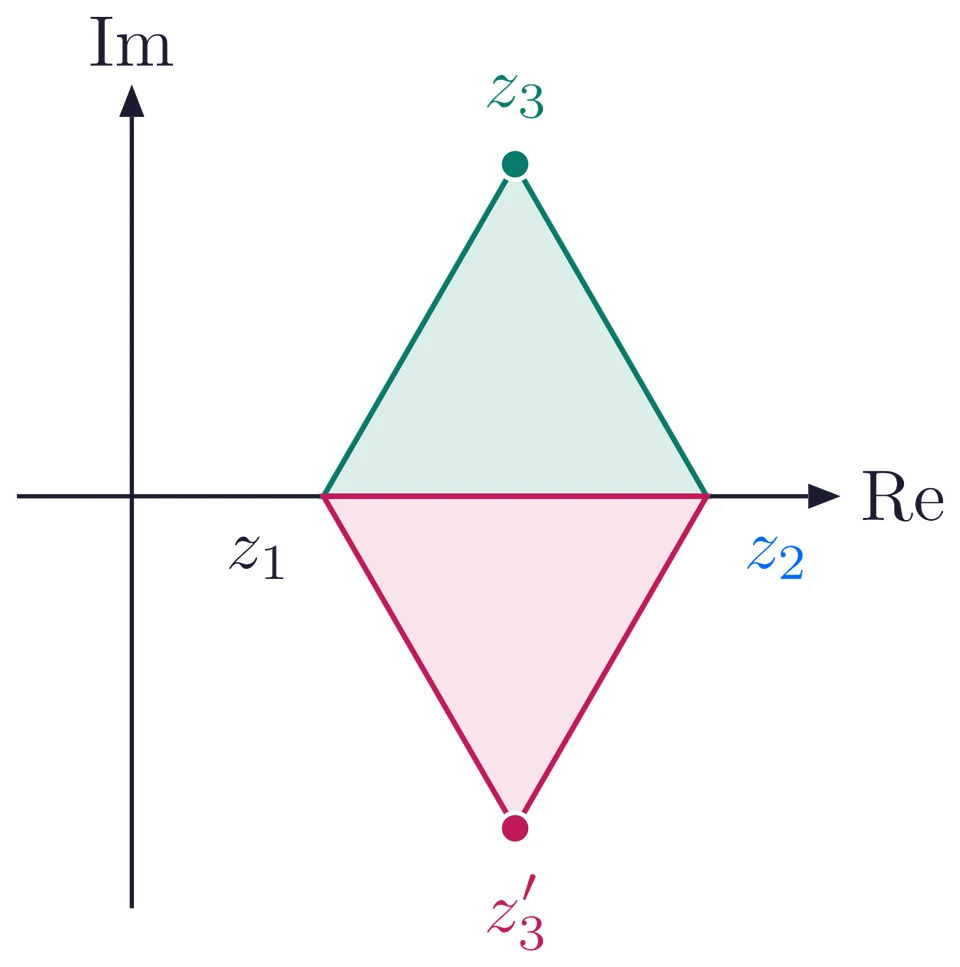
Rotation Theorem in Complex Numbers
To rotate a point about any centre, shift the centre to the origin, turn by multiplying, and shift back. On a triangle, the same idea gives the rotation theorem.
Free PDF, 7 pages: the idea, a solved example, practice questions with answers.
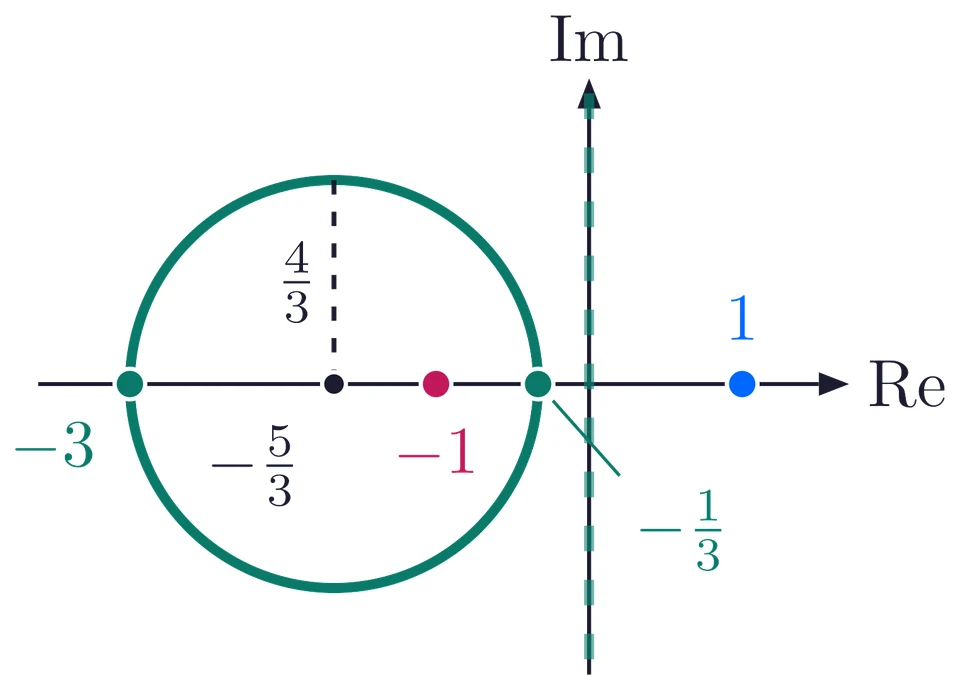
Locus of Complex Numbers: Circles and Lines
Read a modulus as a distance and the locus draws itself: one fixed distance is a circle, two equal distances are a straight line, and one distance k times another is a circle again.
Free PDF, 6 pages: the idea, a solved example, practice questions with answers.
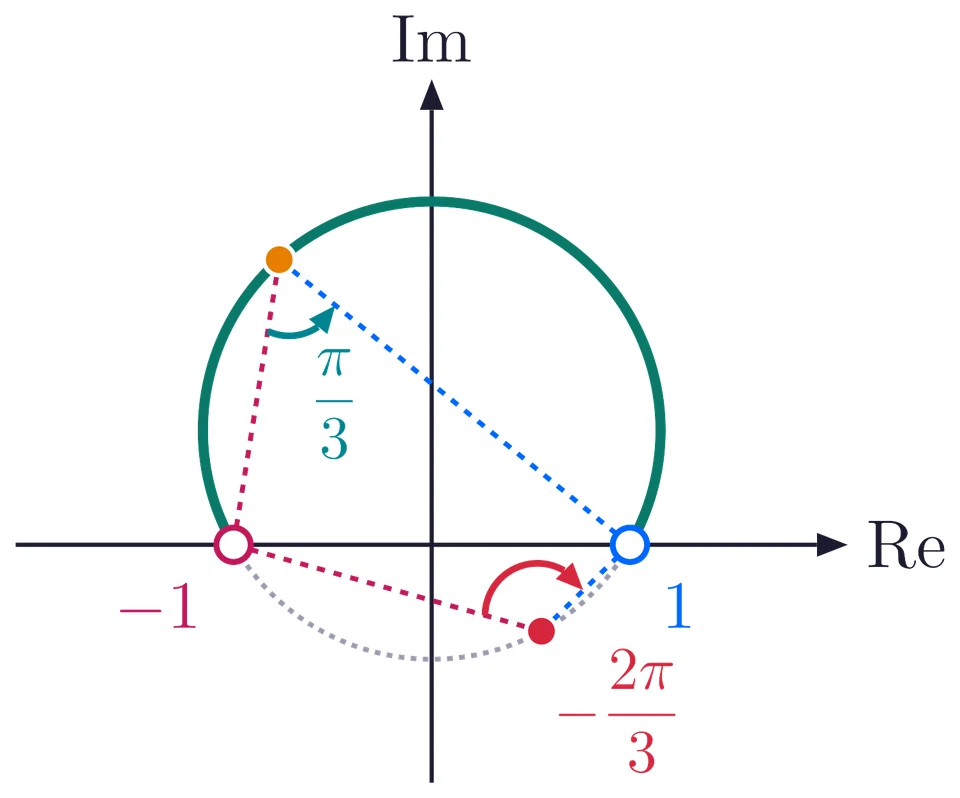
Locus of Argument: Arc of a Circle
Fix the angle arg((z - a)/(z - b)) and z moves on an arc from a to b, with the ends left out. The sign picks the side, the size picks a major or a minor arc, and one formula gives the radius.
Free PDF, 7 pages: the idea, a solved example, practice questions with answers.
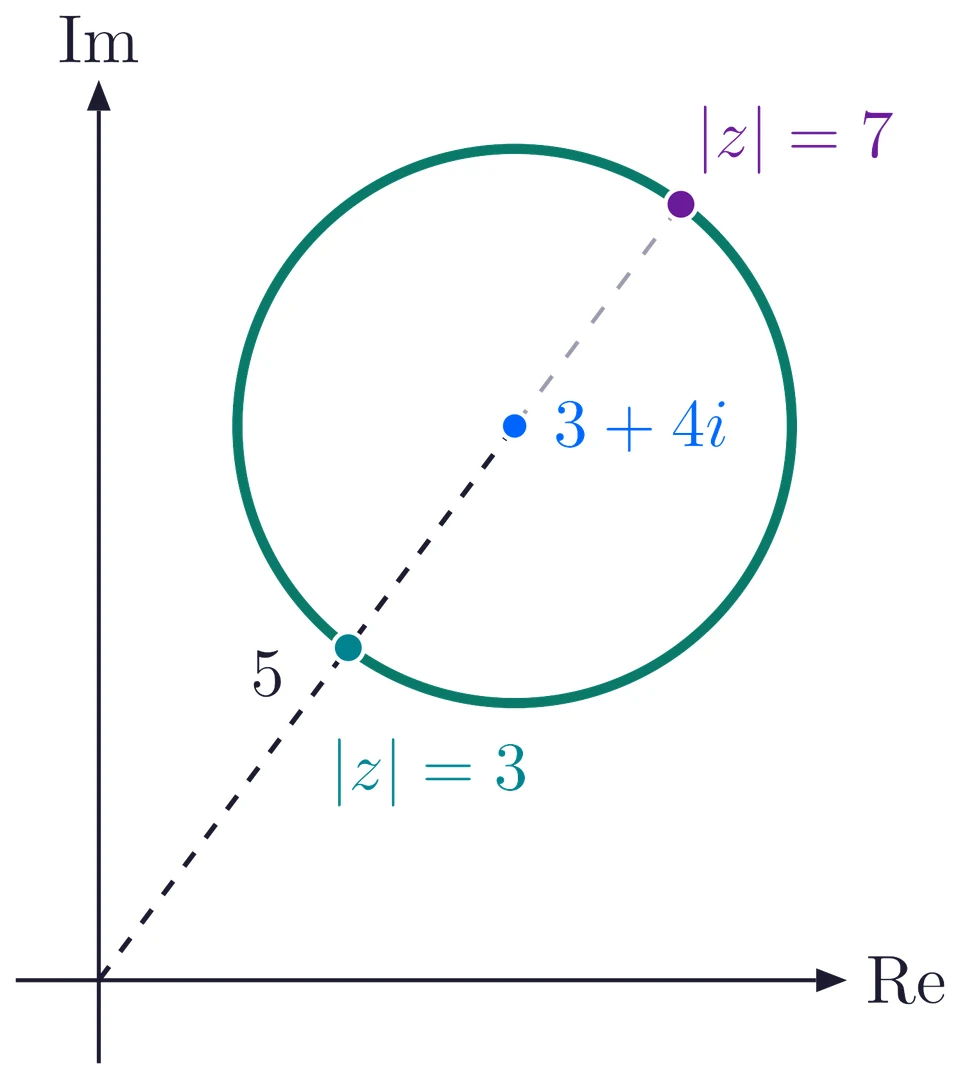
Greatest and Least Value of |z| on a Circle
On the circle |z - a| = r, the nearest and farthest points from the origin lie on the line through the origin and the centre: the least |z| is ||a| - r| and the greatest |a| + r. The triangle inequality is the same picture.
Free PDF, 6 pages: the idea, a solved example, practice questions with answers.
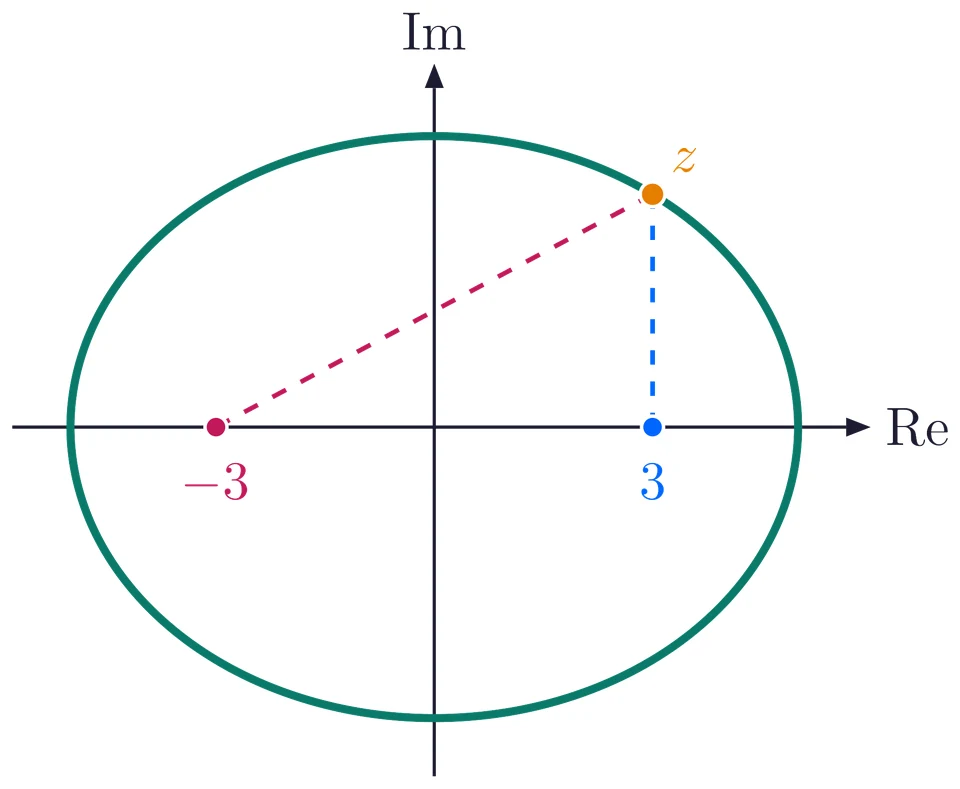
Locus of Complex Numbers: Ellipse and Hyperbola
When the distances from z to two fixed points add up to k, the locus is an ellipse, the segment between the points, or no point; when they differ by k, a hyperbola, two rays, or no point. Compare k with the gap between the points.
Free PDF, 6 pages: the idea, a solved example, practice questions with answers.
More lessons are on the way
Subscribe on YouTube and tap the bell to get each new Complex Numbers lesson first.